
Choosing kitchen cabinet materials in Los Angeles isn’t the same as picking them in Seattle or Chicago. The intense sun, salt air along the coast, and dry valley heat create conditions that can warp, fade, or peel cabinets faster than you’d expect.
Whether you’re renovating a Spanish revival home in Silver Lake or updating a modern condo in West LA, the right material choice affects how your kitchen looks and performs for the next decade.
In this blog we will explore various cabinet materials that are popular amongst LA homeowners and which materials are the right fit for your specific home.
Solid Wood Cabinets: Warmth and Luxury for LA Kitchens
Solid wood remains a premium choice in 2024-2025 LA remodels, particularly in Spanish revival homes, Mid-Century properties, and modern farmhouse kitchens across Hancock Park and Encino.
Common wood species for Southern California include:
- Maple and alder for painted or light-stained finishes
- White oak for high-end modern projects with natural grain patterns
- Walnut and cherry for luxury custom work in neighborhoods like Brentwood
The natural beauty and timeless appeal of wood cabinets command strong resale value. Buyers in the LA market actively look for “all wood” cabinetry. You can refinish or reface over 15-30 years, which other materials cannot match.
However, LA-specific cons exist. Higher cost per linear foot, sensitivity to Valley dryness (causing hairline cracks), and fading in sun-drenched spaces without proper finishes all require consideration.
Best Practices for Solid Wood in Los Angeles Homes
To make solid wood work in LA’s climate:
- Specify kiln-dried lumber acclimated to local humidity before fabrication
- Use catalyzed lacquer or conversion varnish with UV inhibitors
- Choose light stains or natural finishes that age gracefully under sun exposure
- Install heat shields near ovens to protect adjacent doors
- Perform annual inspections for joint movement and keep touch-up kits handy
Engineered Wood (Plywood, MDF, HDF): Stability Built for LA Conditions
Most quality LA cabinetry uses engineered cores because they’re more stable than natural wood under shifting humidity and temperature swings.
Cabinet-grade plywood is the gold standard for cabinet boxes. Multiple cross-laminated layers provide strong screw-holding strength and better moisture resistance than particle board. LA contractors consistently recommend plywood boxes for this reason.
Medium density fiberboard (MDF) serves as the go-to for painted shaker and slab doors. Its smooth surface avoids visible grain under the white and greige paints popular in local projects. High density fiberboard (HDF) offers an upgrade for thinner, more precise MDF doors or panels needing extra durability.
Pros and Cons of Engineered Wood for LA Kitchens
Advantages:
- Reduced warping versus solid wood in San Fernando Valley’s dry heat
- Excellent coastal performance when properly sealed
- Design flexibility for flat or routed door profiles
- Lower cost than all-solid wood builds
Drawbacks:
- Quality varies widely (imported low-grade versus cabinet-grade domestic)
- MDF’s vulnerability to standing water, especially in older LA homes
- Requires proper edge sealing during fabrication
Best practice for many kitchen remodeling projects: plywood boxes paired with MDF or solid wood doors, optimizing cost and durability. Consider CARB II or TSCA Title VI-compliant cores for improved indoor air quality.
Thermofoil and Laminate: Sleek, Low-Maintenance Options
High-quality laminates and thermofoil have gained popularity for modern, minimalist kitchens in downtown lofts, West LA condos, and ADUs. They’re budget friendly options with clean lines.
Thermofoil is a vinyl film pressed over MDF doors, providing uniform appearance for contemporary flat-panel designs. High pressure laminate (HPL) bonds a resin-infused decorative layer to a core, offering superior scratch resistant and impact resistance.
These materials withstand frequent cooking, are easy to clean, and offer extensive color options mimicking wood, concrete, or matte lacquer. However, thermofoil can delaminate near high heat sources—a real concern near ovens or under-bench appliances. Unlike solid wood, laminate cannot be sanded or refinished if damaged.
Where Laminate and Thermofoil Make the Most Sense in Los Angeles
- Rental units in Koreatown, North Hollywood, and Long Beach where durability matters most
- Secondary spaces: laundry rooms, garage kitchens, pool houses
- Combined with wood veneer uppers to raise perceived value
- Matte and textured finishes that hide fingerprints better than high-gloss
Choose reputable brands and professional kitchen cabinet installation. Poor bonding is why laminate projects fail in warm climates.
Metal Cabinets: Industrial and Coastal-Ready Choices
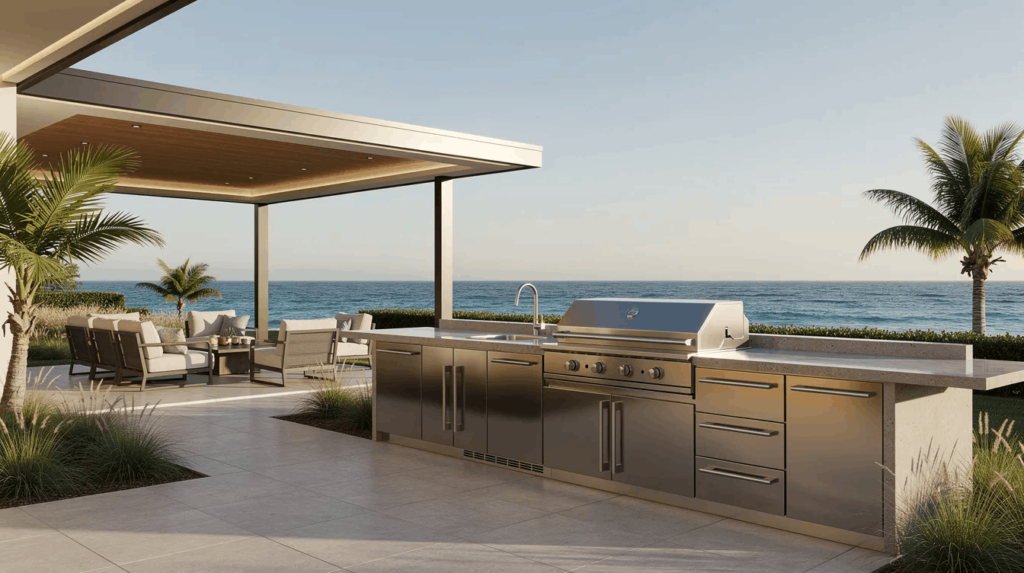
Stainless steel cabinets and powder-coated metal serve niche but growing applications in modern LA homes and outdoor kitchens.
Stainless steel proves highly resistant to moisture, steam, and salt air—practical for Malibu, Venice, and Palos Verdes properties. Powder-coated steel or aluminum doors enable vibrant, color-blocking designs in contemporary remodels.
Advantages: Extreme durability, non-porous hygienic surfaces, effortless pairing with professional appliances.
Drawbacks: Higher cost, visible fingerprints, and a cooler aesthetic that doesn’t suit every Spanish or Craftsman-style house in Silver Lake or South Pasadena.
Best Uses for Metal in Los Angeles Kitchens
Position metal as strategic accent rather than all-or-nothing:
- Island bases, appliance garages, toe-kicks, or vent hood surrounds
- Outdoor kitchens and covered patios exposed to coastal air
- Mixed with wood or engineered wood for warmth
Professional fabrication ensures precise alignment on these reflective surfaces.
Blending Materials: Smart Combinations for Style and Durability
Many successful LA kitchen remodels intentionally mix different materials to balance budget, performance, and style preferences.
Effective combinations include:
- Plywood boxes with white oak veneer doors and matte laminate in sink bases
- MDF painted uppers with highly durable HPL lowers in Valley family kitchens
- Wood veneer cabinets for visible areas, laminate where moisture exposure occurs
This approach manages LA climate challenges—using moisture resistance options under sinks while keeping solid wood where it shows. Mixed-material kitchens photograph well for the competitive LA real estate market, helping justify higher listing prices.
Cost and Value Considerations for LA Homeowners
In Los Angeles, cabinets typically consume 30-40% of a kitchen renovation budget. Strategic material mixing allows higher quality where it counts.
Better materials reduce issues like warping and peeling, which are costly to fix given LA’s high labor rates. Climate-appropriate choices improve appraisal impressions in competitive neighborhoods like Sherman Oaks and Burbank.
Choosing the Best Cabinet Material for Your LA Kitchen
The right material depends on exact location, kitchen design, usage patterns, and how long you plan to stay.
By scenario:
- Coastal homes: Prioritize plywood, laminate, and metal for moisture resistance
- Hot inland homes: Materials handling dry heat, plus UV-resistant finishes
- Shaded hillside houses: More flexibility including solid wood
Factor in lifestyle—frequent cooks need durable, wipeable surfaces, while design-focused homeowners might prioritize unique veneers and custom stains. Evaluate maintenance tolerance: minimal upkeep favors laminates and engineered wood.
Quick Decision Checklist for Los Angeles Homeowners
- Confirm your home’s microclimate (coastal, valley, hillside)
- Note daily direct sun exposure on cabinet surfaces
- Decide between painted, stained, or laminate looks
- Prioritize cabinet box quality first (cabinet-grade plywood minimum)
- Choose door material based on aesthetics and climate demands
- Ask fabricators what materials perform best in 5-10+ year LA projects
- Schedule in-home sample viewing under actual LA daylight
FAQ
Are plywood cabinet boxes really worth the extra cost in Los Angeles?
Cabinet-grade plywood outperforms particle board and low-end composites in LA’s climate, offering better screw holding, moisture resistance, and long-term structural integrity. In neighborhoods with older plumbing, plywood boxes survive minor water events under sinks far better. While initial costs run higher, plywood often extends cabinet life by years—valuable given LA’s high labor costs. Homeowners staying 7-10 years typically see the investment pay off.
What cabinet finishes hold up best to LA’s strong sunlight?
Catalyzed lacquers and conversion varnishes with UV inhibitors offer strong protection for both wood and painted kitchen cabinets. Lighter stains and paint colors fade less noticeably than dark or saturated hues. Use window coverings or UV-filtering film to prolong finish life, and discuss UV protection specifically with your finisher—not all coatings equally resist sunlight.
Are there low-VOC or eco-friendly cabinet material options in Los Angeles?
Many cabinet makers offer low-VOC finishes and CARB II or TSCA Title VI-compliant cores reducing formaldehyde emissions. Options include FSC-certified plywood, rapidly renewable veneer species, and waterborne finishes meeting California’s stricter regulations. These may slightly increase costs but prove worthwhile in tightly sealed, energy-efficient homes where off-gassing concerns apply.
How do I make my kitchen cabinets more secure in an earthquake-prone city?
Sturdy construction and professional wall fastening matter in seismically active Los Angeles. Use quality wall anchors into studs, reinforced hanging rails, and appropriate fasteners. Soft-close hinges stay shut better during shaking, and simple interior latches on upper cabinets protect heavy dishes. Some homeowners add low-profile rails inside shelves to prevent items from sliding out during strong quakes.