
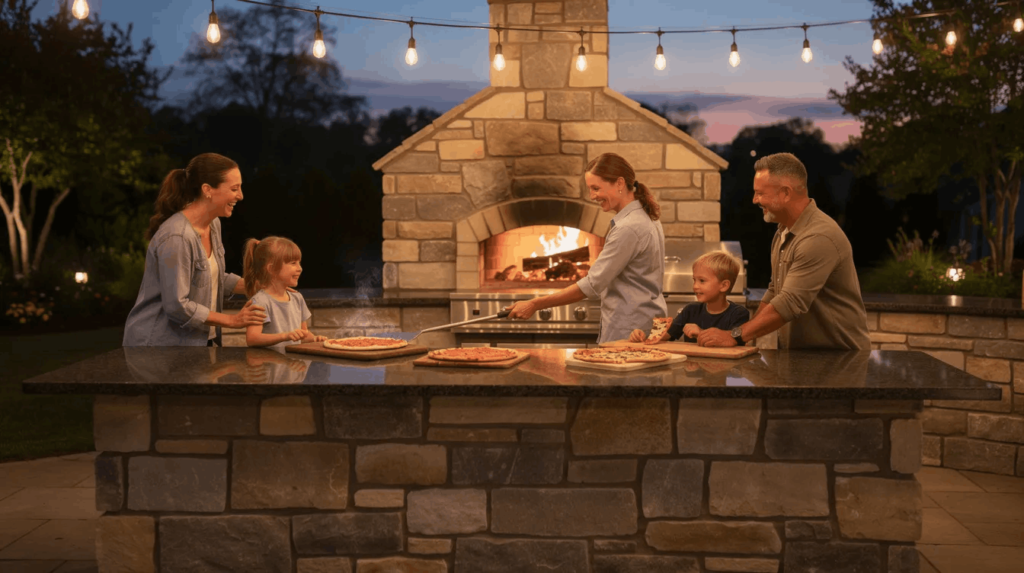
This guide is written from a remodeling and contractor perspective. We’ll focus on layout, installation complexity, and real-world use. The best pizza ovens for your outdoor kitchen depend on your available space, budget, fuel type preferences, desired cooking style, and whether you want a permanent built-in oven or a portable pizza oven you can move and store.
Quick Comparison Table: Types of Outdoor Pizza Ovens
Before diving into details, this comparison table helps you narrow down which pizza oven type fits your outdoor space and cooking goals.
| Pizza Oven Type | Best Outdoor Kitchen Fit | Recommendation | Cost |
|---|---|---|---|
| Custom Built-in Pizza Ovens | Large patios, full outdoor kitchen remodels | Speak to a contractor about installation requirements. | $4k-$20k+ |
| Countertop Pizza Ovens | Islands with granite or concrete counters | Ninja Artisan Electric Outdoor Pizza Oven | Check Price on Amazon |
| Wood-Fired Pizza Ovens | Open backyards with good ventilation | Big Horn Outdoors 2″ Woodfire Pizza Stone Oven | Check Price on Amazon |
| Multi-Fuel Pizza Ovens | Prep zones with fuel storage options | Ooni Karu 12 Multi-fuel Outdoor Portable Pizza Oven | Check Price on Amazon |
Built-In Outdoor Pizza Ovens
A built-in pizza oven includes masonry domes, stainless inserts, or modular ovens set into stone or stucco islands, often with a chimney or vent hood.
Best for: Homeowners planning a long-term outdoor kitchen remodel, frequent entertainers, and those wanting a statement piece in their backyard cooking space.
Fuel options: Built-ins come as gas oven inserts (connected to natural gas lines) or traditional wood fired oven cores. Gas offers convenience; wood delivers authentic flavor. Each affects venting and local code requirements differently.
Best outdoor kitchen fit: Large patios, covered pavilions, or full backyard remodels where the oven can be centered in a cooking wall alongside grills and side burners.
Recommendation: Speak to an Experienced Outdoor Kitchen Contractor
A custom built-in outdoor pizza oven can be a significant investment, typically ranging from $4,000 to $20,000+ depending on the size, materials, fuel type, masonry work, ventilation needs, and overall outdoor kitchen design. Because these ovens are permanent structures, they may also require permits, inspections, and compliance with local building codes, fire safety requirements, and state regulations.
Portable Outdoor Pizza Ovens
A portable pizza oven is a compact unit designed to sit on a table, cart, or pizza oven stand. They’re easy to move, store, or upgrade when newer models release.
Countertop Pizza Ovens
Countertop pizza ovens are designed to sit permanently on an outdoor counter or island. They’re usually heavier than strictly portable models but not fully built-in.
Note: Many portable outdoor pizza ovens can function as countertop ovens if clearances and heat protection are planned correctly. Not all pizza ovens are designed for permanent outdoor placement, so check specifications.
Who benefits: Homeowners with existing outdoor kitchens who want to add one pizza oven without rebuilding cabinets, or who want a semi-permanent feel.
Considerations: Counter material matters—granite, concrete, tile, or stainless can handle heat better than laminate. You may need heat shields or stands underneath. Route gas lines conveniently to the counter area if using a gas burner model.
Recommendation: Ninja Artisan Electric Outdoor Pizza Oven
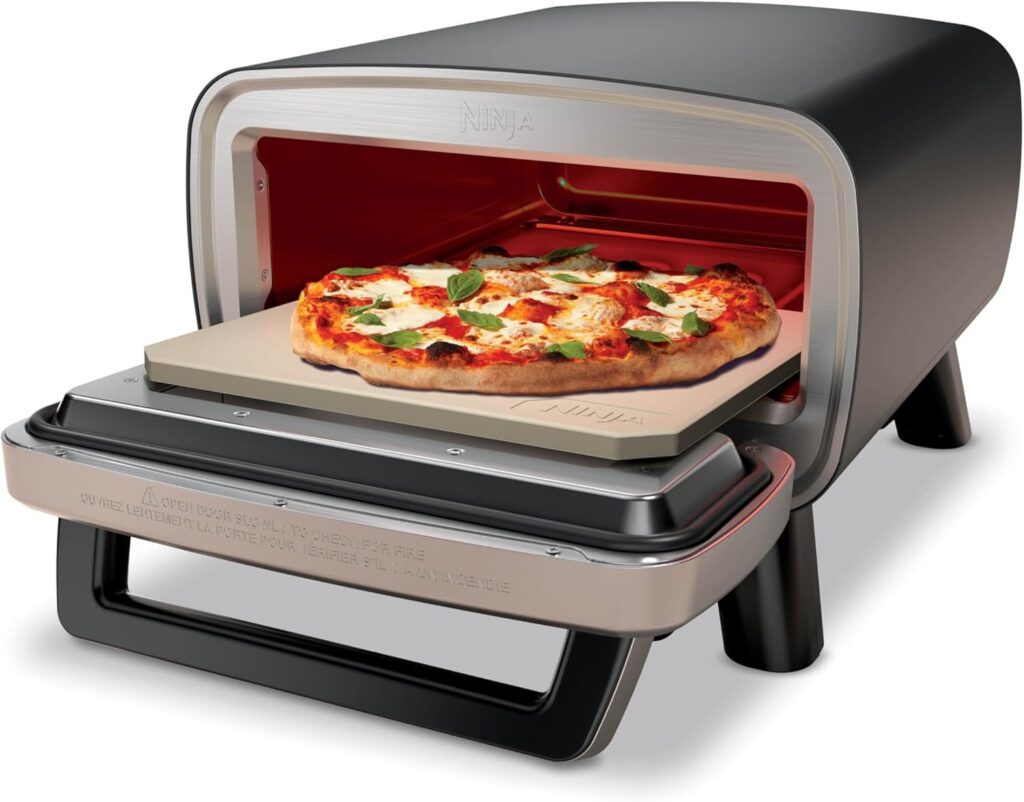
This is a strong pick for anyone who wants high-heat, restaurant-style pizza without building a full outdoor kitchen. Its compact design makes it easy to place on a countertop or other stable outdoor surface, while still delivering the intense heat needed for crisp crusts and fast cook times. It’s a good option for homeowners who want an easier, more convenient way to make restaurant style pizza outdoors.
Wood-Fired Pizza Ovens
Wood burning pizza ovens offer traditional smoky flavor and high temperatures that appeal to purists. The crackling fire creates ambiance that gas simply can’t match.
The appeal: Classic wood fired pizza flavor and high-heat performance similar to Italian brick ovens. Using wood and charcoal as fuel sources offers the closest experience to authentic Neapolitan pizza, with dense, slow-burning woods like oak, ash, or beech recommended for optimal results.
Outdoor kitchen fit: Wood-fired ovens pair well with larger, more open backyards where smoke can dissipate freely and there’s dedicated space for wood storage.
Recommendation: Big Horn Outdoors 12″ Woodfire Pizza Stone Oven
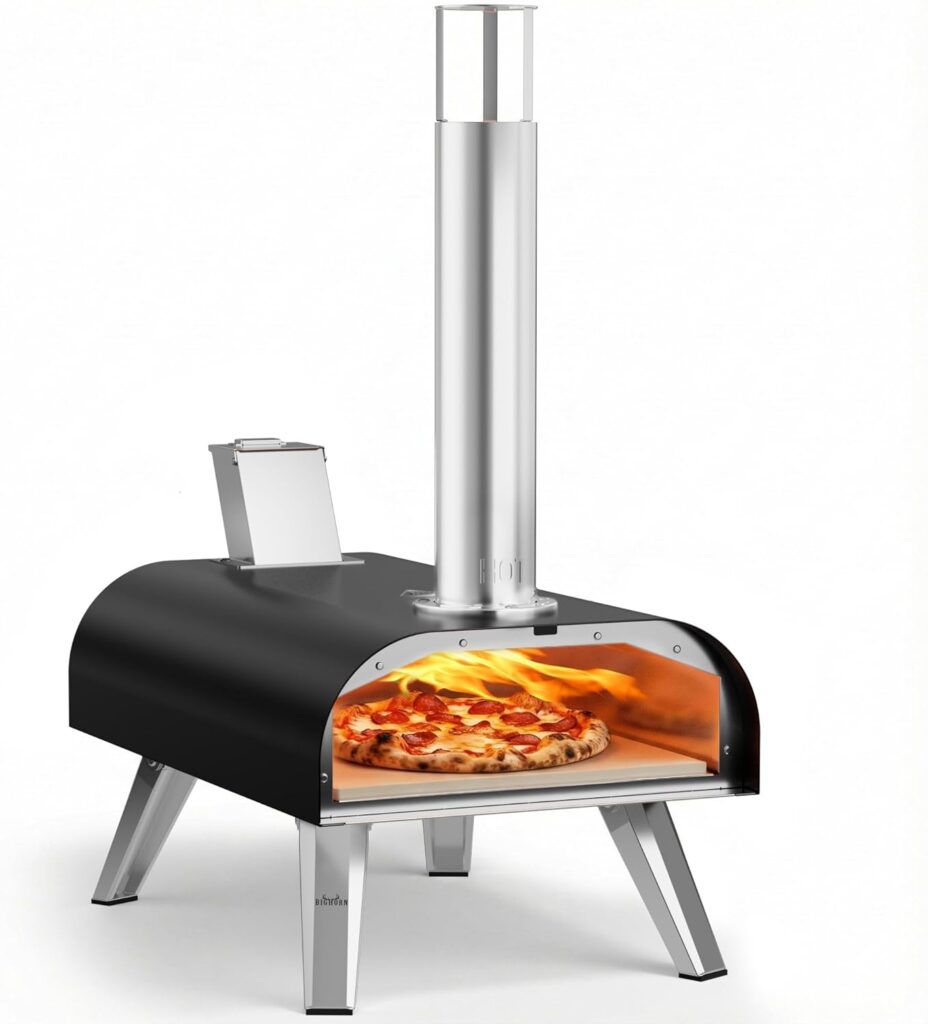
This is a great pick for anyone who wants authentic, stone-baked pizza flavor at home without building a full outdoor kitchen. Its compact outdoor design makes it easy to place on a patio or countertop, while the wood-fired heat helps create the crispy crust, smoky flavor, and high-temperature cooking style people expect from traditional pizza ovens. It’s a solid option for backyard entertaining, especially if you want a portable oven that can make restaurant-style pizzas without taking up too much space.
Multi-Fuel Pizza Ovens
Multi-fuel pizza ovens can switch among wood, charcoal, and gas (often with an optional burner kit), offering maximum flexibility for different occasions.
Best for: Enthusiasts who want wood fired flavor on weekends but quick gas-fired pizzas on weeknights, or people in areas with seasonal burn restrictions.
Practical considerations: Need for extra accessories to switch fuels, storage of different fuel types (both wood and gas supplies), and more moving parts to maintain.
Integration: Often used as countertop or cart-based units in a prep zone, with gas hookup plus a safe area for wood or charcoal storage.
Recommendation: Ooni Karu 12 Multi-fuel Outdoor Portable Pizza Oven
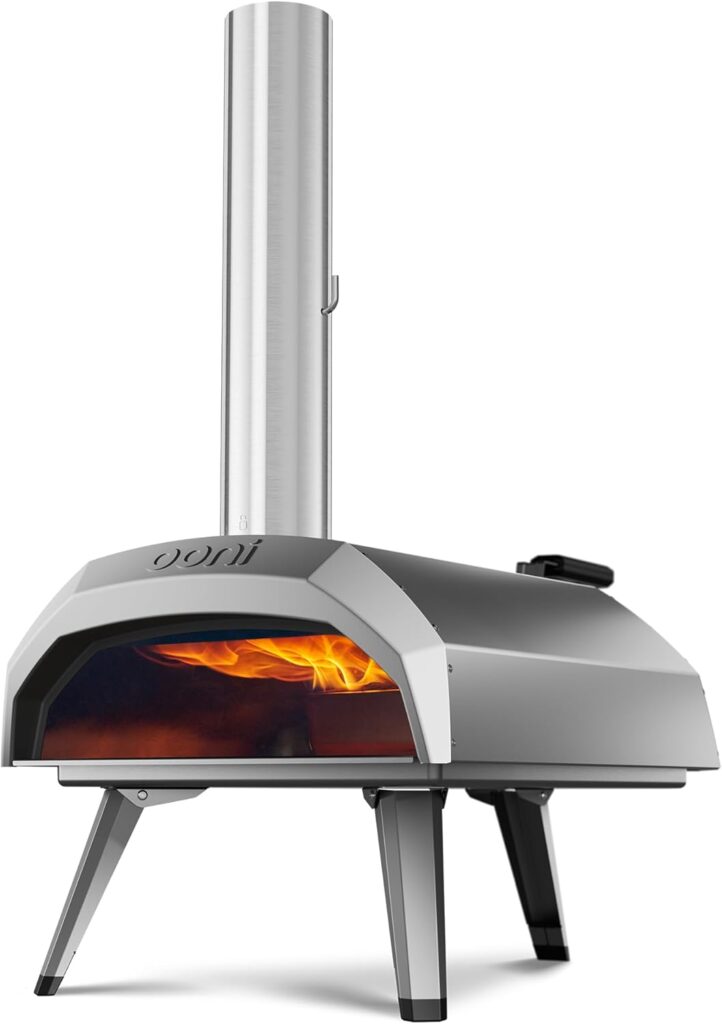
The is a great choice if you want flexibility without sacrificing performance. It can cook with wood or charcoal for that authentic smoky flavor, with the option to use gas with an added burner attachment for easier, more consistent heat control. It’s designed to reach high temperatures for fast, crispy, restaurant-style pizzas, while still being compact enough for backyard patios, outdoor kitchens, or casual weekend cooking. For anyone who wants one oven that can handle different fuel styles, this is a versatile and reliable pick.
What to Consider Before Buying an Outdoor Pizza Oven
This checklist covers issues we commonly see during actual outdoor kitchen remodels. Address these before purchasing:
Available Patio or Counter Space: Measure your patio, planned island, and clearances. Compare them with the oven’s footprint plus any pizza oven stand or cart dimensions. A 16” cooking surface needs more real estate than a 12” model.
Heat Clearance: Manufacturers specify clearance requirements from walls, railings, pergola beams, and overhead structures. Typical distances range from 24-36”. Always check the manual—heat distribution from a 900°F oven is no joke.
Ventilation: Consider wind patterns and smoke direction for wood-fired models. Under a solid roof structure, you may need a vent hood or chimney extension. Proper insulation in pizza ovens is crucial as it determines the maximum temperature and affects how quickly the oven heats and cooks.
Fuel Source: Does your home already have natural gas at the patio? Or will you need propane tanks or wood storage? When choosing a pizza oven, consider the fuel source, as options include wood, gas, charcoal, and electric, each offering different cooking experiences and flavors.
Weather Exposure: Sun, rain, coastal air, and dust all affect longevity. Stainless steel and weather-resistant materials extend lifespan. Investing in an oven cover can help protect the unit from adverse weather conditions.
Prep Space: Having at least a few feet of counter space for stretching dough, arranging toppings, and cooling perfectly cooked pizzas is as important as the oven itself.
Storage: Plan cabinets or an outdoor storage cart for peels, cutting boards, fuel, and serving pieces—not just the oven.
Nearby Seating / Dining Layout: Keep the hottest cooking zone a safe distance from main seating while still close enough to serve pizzas quickly. Most pizza ovens radiate significant heat during operation.
Safety: Consider child traffic patterns, pets, slip-resistant flooring around the cooking area, and position the opening facing away from main walkways where possible.
Local Code or Contractor Considerations: Los Angeles and many cities have rules about gas lines, clearances to structures, and roof penetrations. LA requires 10’ from doors/windows for wood-fired installations. Check local codes or consult a contractor.
Freestanding, Countertop, or Built-In: Decide whether your next step is a simple freestanding cart setup, a countertop micro-zone, or a fully integrated outdoor kitchen pizza oven island. Insulation in a pizza oven affects heat retention and cooking efficiency; well-insulated ovens maintain higher temperatures for longer periods, which is beneficial for cooking multiple pizzas in succession.
Common Mistakes to Avoid
Based on issues contractors see once homeowners start using their ovens, here’s what to watch for:
Buying Without Checking Dimensions: Don’t purchase on impulse without confirming overall size, opening width, and whether a 16” rotating stone actually fits your counter or cart.
Not Planning Enough Prep Space: Squeezing a pizza oven into a tiny corner without room for dough, toppings, and trays makes even simple pizza nights stressful.
Placing the Oven Too Close to Walls or Seating: Risks include heat damage to structures, smoke blowing into dining areas, and guests feeling uncomfortably hot. Keep safe distances and angle the opening away from main seating.
Forgetting Storage: Peels, bread flour, cutting boards, and fuel end up scattered without planning. Include cabinets or a storage cart from the start.
Ignoring Fuel Source Needs: Underestimating propane tank swap frequency, not planning a natural gas stub, or under-ventilating wood-fired smoke creates ongoing frustration.
Choosing Portable When Built-In Makes More Sense: Families entertaining weekly might be better served planning a built-in oven as part of a larger outdoor kitchen remodel rather than wrestling with a portable setup every weekend.
Choosing Built-In Before You’re Ready: The reverse mistake: committing to a permanent oven when your patio is due for a full redesign in two years or your budget oven should be a stepping stone to something better.
Not Considering Multi-Use Cooking: Many other ovens can roast meats and vegetables beyond pizza. Think about pan sizes and oven door openings if you want more than just making pizzas.
When to Hire a Contractor
Some pizza oven setups are truly DIY-friendly. Others benefit from professional planning and permitting, especially in dense urban areas like Los Angeles.
Built-In Outdoor Pizza Ovens: Any permanent oven integrated into masonry or cabinets warrants professional design and installation. Weight, heat management, and venting must be handled correctly for safety and longevity.
Outdoor Countertops or Cabinetry: Adding new outdoor counters or storage to support an oven is a good time to involve an outdoor kitchen remodeling contractor who understands material compatibility and weather resistance.
Gas Line Work: Running new gas lines or stubs for a gas pizza oven generally requires a licensed professional and may need inspection and permits.
Electrical Work: Task lighting, outlets for accessories, or any electric pizza ovens or rotisserie motors should be installed to code by an electrician.
Full Outdoor Kitchen Projects: Homeowners planning grills, sinks, fridges, and pizza ovens together benefit from a cohesive layout plan and one point of responsibility.
FAQ
What type of pizza oven is best for an outdoor kitchen?
There’s no single “best” type. For most busy families, a built-in or portable outdoor pizza oven offers the best mix of convenience and performance with quick 15-20 minute preheat times. Consider how permanent you want your outdoor kitchen pizza oven to be over the next 5-10 years before deciding.
Is a built-in pizza oven worth it?
Built-in pizza ovens are usually worth it for homeowners planning a long-term outdoor kitchen remodel who entertain often. They add visual impact and can increase home value—data suggests 75-85% cost recoupment. However, they require higher upfront investment and careful design. If you’re unsure, start with a high-quality portable pizza oven and upgrade to a built-in when your whole outdoor kitchen is redesigned.
Can you put a portable pizza oven in an outdoor kitchen?
Yes. Many homeowners successfully integrate portable pizza ovens into outdoor kitchens by placing them on a dedicated counter or stainless steel cart. Check heat clearances, use heat-resistant surfaces, and ensure proper ventilation—especially under pergolas or solid roofs. Home ovens designed for portability can look surprisingly integrated with the right setup.
Do outdoor pizza ovens need ventilation?
All outdoor pizza ovens need adequate airflow and a safe path for heat and exhaust. Requirements vary by fuel type and whether the oven is under a roof or open sky. Gas and wood-fired ovens placed under solid covers or near walls may require a vent hood, chimney extension, or additional clearance to meet code. Always check manufacturer instructions. In cities like Los Angeles with specific ventilation and fire safety rules, consult a contractor to ensure compliance.
What accessories do you need for an outdoor pizza oven?
Essential accessories include a quality pizza peel for launching and a turning peel for rotating pizzas, an infrared thermometer to check stone temperature, heat-resistant gloves for safety, and a cover to protect your investment. A sturdy stand or cart at proper working height makes a significant difference. For those seeking maximum temperature consistency, consider upgrading to a thicker pizza stone for better heat retention. Storage solutions keep peels, fuel, and tools organized between uses.
Should I hire a contractor for an outdoor pizza oven?
For simple portable ovens on open patios, a contractor usually isn’t necessary beyond basic safe placement and possibly running an exterior outlet. For built-in ovens, new gas lines, electrical work, or full outdoor kitchen remodels, hiring a contractor is strongly recommended for safety, permits, and long-term durability. LA Top Renovation can help Los Angeles homeowners decide which scope makes sense and design a pizza oven setup that fits their budget and backyard—whether that’s advising on a standalone portable or building a complete outdoor kitchen island.
Conclusion
The best pizza ovens for outdoor kitchens are the ones that match your cooking style, available outdoor space, fuel preferences, and long-term backyard plans. There’s no universal perfect oven—only the right oven for your situation.
Built-in ovens deliver permanence and home value. Portable pizza ovens offer flexibility and lower commitment. Gas models prioritize convenience for york style or weeknight dinners. Wood fired options reward those willing to master fire management with unmatched Neapolitan style flavor.
Beyond the oven itself, think about prep space, storage, seating layout, and overall outdoor kitchen ideas. The difference between frustrating pizza attempts and memorable pizza nights often comes down to planning the space around the oven, not just the appliance purchase.
If you’re a Los Angeles homeowner considering a full outdoor kitchen remodel—including a dedicated pizza oven zone, grill station, and proper countertops we can help. Contact us today for a free consultation
As an Amazon Associate, we may earn from qualifying purchases.