
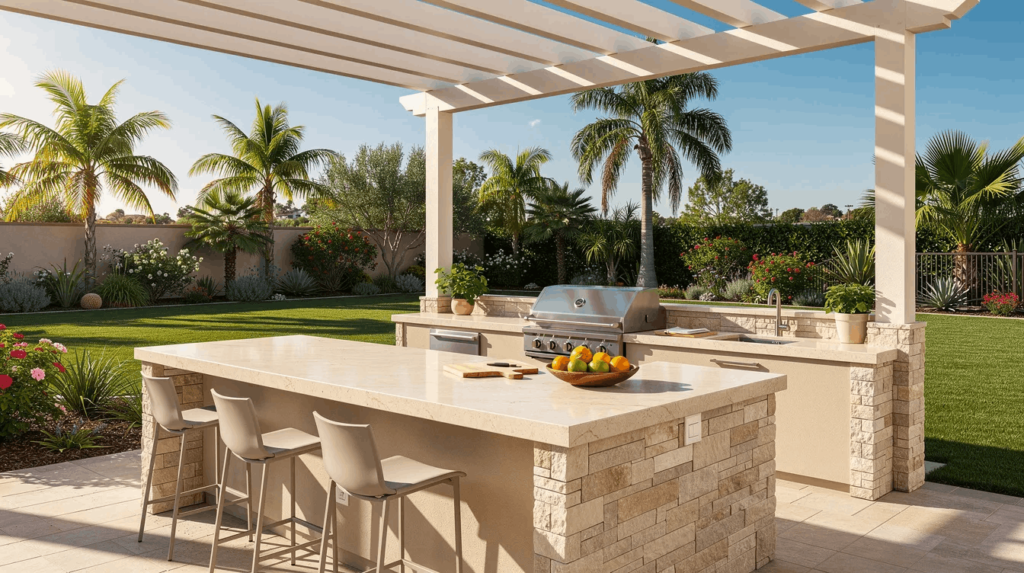
Los Angeles enjoys a climate that makes outdoor cooking possible almost every month of the year. Hot, dry summers push temperatures into the 85–95°F range in inland areas like the San Fernando Valley, while coastal neighborhoods stay milder at 75–85°F. Winters rarely dip below 45°F, and with over 280 days of sunshine annually, your outdoor kitchen sees far more action than kitchens in regions where snow forces a months-long hibernation.
This constant use comes with a catch. Grease, dust, pollen, and smog particulates accumulate faster when you’re firing up the grill from March through November—or even year-round for dedicated LA cooks. Unlike homeowners in colder climates who deep clean once in spring and once in fall, maintaining your outdoor space in Los Angeles means shifting focus to consistent prevention rather than post-event recovery.
This guide is a practical, step-by-step plan tailored to LA neighborhoods from the Valley to the coast. You’ll find weekly, monthly, and seasonal checklists designed around how outdoor kitchens actually age in this climate, plus guidance on when DIY efforts should give way to a call to a licensed professional.
Weekly or Biweekly Tasks: Keeping Your LA Outdoor Kitchen Fresh
A 10–15 minute routine every one to two weeks prevents soot, smog film, and pollen from creating the kind of stains and corrosion that lead to costly repairs down the road. LA grill cleaning professionals report that consistent post-use care removes 95% of carbonized residue—the buildup that causes flare-ups responsible for 40% of grill fires.
Here are the quick tasks to keep your outdoor kitchen clean and functioning:
- Brush grill grates after each use with a wire brush or stainless steel brush to remove carbonized food debris, then wipe down with a mild degreaser diluted 1:10 with water
- Wipe down stainless steel surfaces including doors, handles, and control panels using a pH-neutral cleaner, always wiping with the grain to avoid micro-abrasions that trap smog particles
- Clean countertops with warm water and mild dish soap, paying special attention to citrus juice, wine, and salsa spills that can etch natural stone countertops within hours if left untreated
- Empty and rinse drip trays and grease catch pans before LA’s heat (often exceeding 90°F) bakes residue into a varnish-like coating that ignites at 600°F
- Sweep or use a leaf blower to clear debris from around burners and cabinet bases, especially during Santa Ana wind events that deposit 2–5 times more particulates than normal
- Check under side burners and around your pizza oven for accumulated leaves and palm fronds
This routine maintenance transforms what could become a major project into a manageable habit. Local contractors note that properly maintained outdoor kitchens cost around $100 annually in upkeep, while neglected ones average $500 or more in repairs.
Monthly Maintenance: Inspect and Protect Your Investment
Monthly checkups catch the early signs of rust, leaks, and cracks that appear faster under LA’s UV-heavy sun. LA receives 2,500–3,000 hours of UV exposure annually, which can cause untreated fittings to rust within six months.
Use this checklist to inspect appliances and systems:
- Inspect gas connections, flexible gas hoses, and fittings for cracks or brittleness using soapy water on connections—bubbles at 5–10 psi indicate a leak
- Check burner ports for clogs from grease, sand, and wind-blown debris, cleaning with a pipe cleaner or 0.040-inch wire to restore even flames and achieve 20–30% fuel savings
- Examine ignition systems for corrosion or loose wires, particularly in coastal and canyon areas where marine layer humidity runs 70–90% in mornings—plan to replace worn batteries every 3 months
- Open all cabinets and drawers to look for termite frass (sawdust-like pellets), rodent gnaw marks on wiring, and insect nests around warm outdoor kitchen appliances
- Check caulk and grout lines around countertops and backsplashes for cracking from heat cycles and minor seismic movement, then recaulk with silicone rated for -20°F to 200°F
- Clean outdoor refrigerator door gaskets (test by closing on a dollar bill—it should resist pulling) and clear condenser vents to maintain optimal performance in 100°F ambient heat
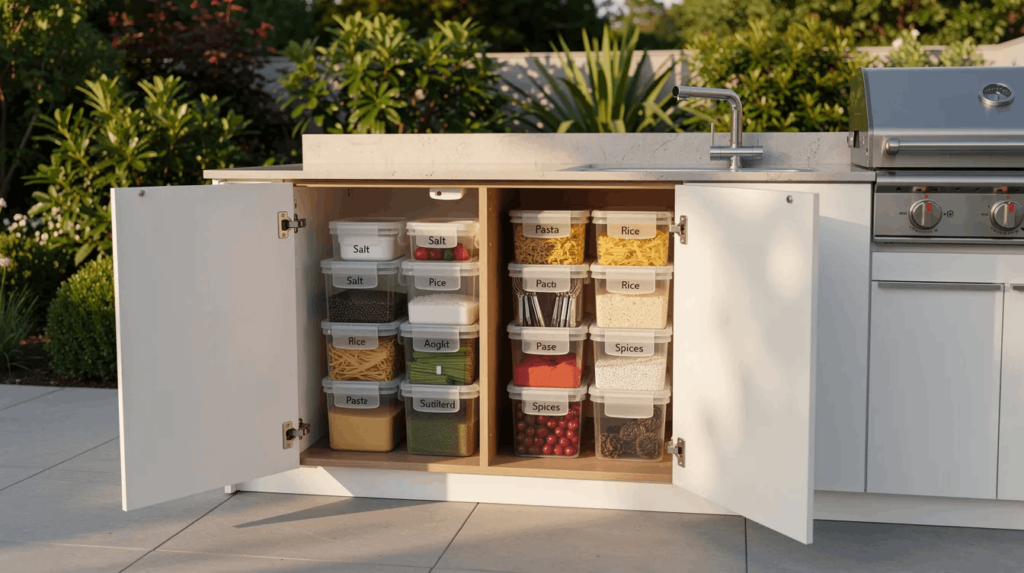
- Inspect storage areas for moisture buildup or pest activity
This monthly regular inspection prevents small problems from becoming expensive emergencies and helps you schedule professional service before issues escalate.
Seasonal Care in Los Angeles: Spring, Summer, Fall & Winter
While LA doesn’t have harsh winters, seasonal shifts still affect outdoor kitchens. Spring marine layer, peak summer heat, Santa Ana winds, and winter rains each bring distinct challenges that require adjusted maintenance approaches.
Spring: Post-Rain Clean-Up and Pre–Grilling Season Prep
Spring cleaning in LA means recovering from the rainy season and preparing for heavy grilling season use:
- Perform a deep cleaning after the main rainy months (February–March) to remove mildew growth—Cladosporium thrives at 80% humidity—and flash rust using a 1:1 water and white vinegar solution
- Test natural stone countertops by spraying water on the surface; if it absorbs rather than beads, reapply sealer for 1–2 years of protection against efflorescence and staining
- Deep clean grills by removing grates, clearing burner ports, and checking flame patterns on all burners, side burners, and your pizza oven before spring parties
- Inspect cabinet interiors and under counters for water intrusion from winter storms, resealing gaps with exterior-grade caulk
- Replace weather seals on refrigerators and storage compartments if they show cracking or compression damage
Summer: Managing Heat, Sun, and Heavy Use
Summer demands protecting your outdoor cooking space from peak UV exposure and the strain of constant use:
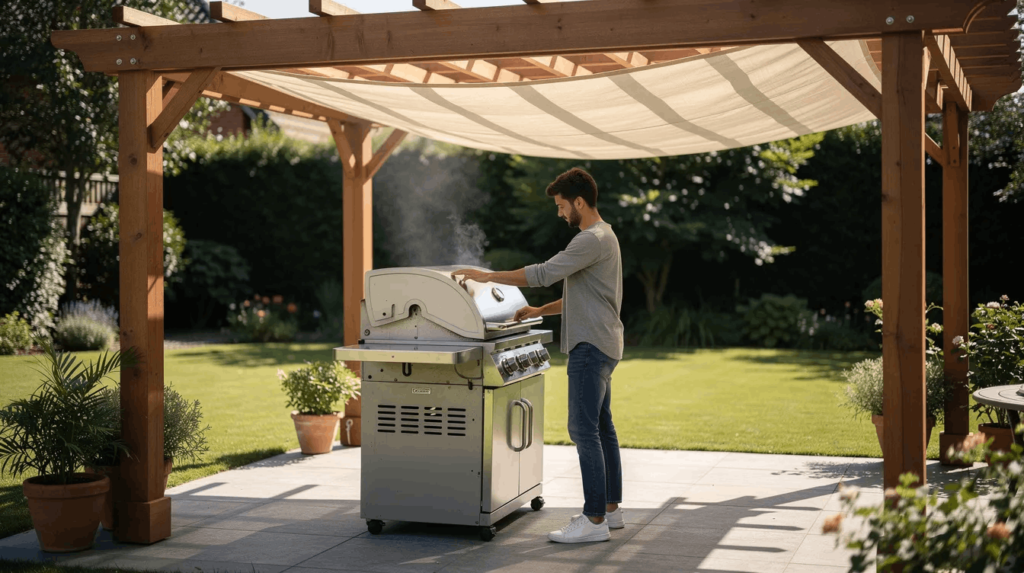
- Install or use shade structures like pergolas, umbrellas, or retractable awnings that reduce direct sun by up to 90%—essential in the San Fernando Valley where temperatures reach 95–110°F
- Use UV-resistant covers on grills and outdoor kitchen appliances when not in use to slow the 20–30% faster fading that occurs on untreated surfaces
- Increase surface cleaning frequency to handle sunscreen residue, sweat, and condiment spills that accumulate during peak barbecue season
- Monitor outdoor refrigerators and ice makers for proper temperature (35–38°F) since compressors work 15–20% harder in triple-digit heat waves
- Adjust and test flame patterns more frequently because excessive heat and constant use can warp or clog burner ports
Winter: Light Rain, Cool Nights, and Occasional Storms
LA winters (December–February) bring cooler evenings, occasional storms, and higher humidity rather than freezing temperatures:
- Cover grills, sinks, and side burners with waterproof, breathable covers (3000mm waterproof rating with polyester construction) after a thorough cleaning in late fall
- Drain or insulate exposed water lines to sinks and ice makers in colder inland or foothill areas where rare overnight freezes can hit 28°F for 5–10 nights yearly
- Move portable cushions, wood accessories, and countertop appliances indoors between storms to prevent warping and moisture buildup
- Check for pooled water on countertops and cabinet tops after heavy rains—surfaces should slope at least 1/4 inch per foot for proper drainage during the colder months
- Inspect weather exposure damage after storms and address any standing water promptly to prevent mildew
Protecting Materials: Stainless Steel, Countertops, and Cabinets in LA
LA’s UV radiation, air quality, and coastal salt create a uniquely challenging environment for outdoor materials. Understanding proper care for each material in your outdoor kitchen components extends their lifespan significantly.
| Material | Cleaning Method | Sealing/Protection | LA-Specific Concerns |
|---|---|---|---|
| Stainless Steel (304/316) | pH-neutral cleaner, wipe with grain | Carnauba wax coating | Salt pitting (316 grade resists 5x better) |
| Granite/Travertine | Warm water, pH-neutral soap | Silane/siloxane sealer every 1–3 years | 50% higher stain risk if unsealed |
| Porcelain (20mm) | Neutral wipes only | None needed (0.1% absorption) | UV fade under 5% in 5 years |
| Concrete | Mild dish soap and water | Penetrating sealer annually | Hairline cracking from temperature swings |
| HDPE/Marine Polymer Cabinets | Mild soap and water | Check hinges for thermal expansion | Loosening hardware from heat cycles |
For stainless steel appliances, products like Barkeepers Friend work well for stubborn stains. Always wipe with the grain to prevent micro-abrasions that trap smog and salt particles. Coastal residents should consider 316 marine-grade stainless, which resists salt pitting five times better than standard 304 grade.
Natural stone countertops require sealing with silane/siloxane impregnators that penetrate 1/8 inch into the stone. Test porosity by spraying water on the surface—if it absorbs within 30 seconds, it’s time to reseal. Avoid abrasive cleaners and anything with pH below 4 (including vinegar and lemon juice for regular cleaning) as these cause 0.1–0.5mm etching.
For outdoor furniture and prep areas, avoid power washing above 800 psi on stone surfaces—higher pressure causes damage. Stick to 800 psi fan tips on concrete and pavers only.
Gas, Electrical, and Water: Safety Checks for LA Outdoor Kitchens
LA homes often have complex built-in gas, electrical, and plumbing systems feeding outdoor kitchens. LA’s seismic activity—averaging 5,000+ earthquakes yearly above 1.0 magnitude—means connections can shift and loosen over time, making regular inspection essential for safe operation.
Essential safety checks include:
- Visually inspect exposed gas lines, valves, and regulators twice yearly for corrosion and movement, especially after any noticeable earthquake (like the 4.4 magnitude events in 2024)
- Test GFCI outlets per NEC 406.4 standards—they should trip in under one second and reset properly
- Check outdoor-rated switches and lighting circuits around the kitchen for proper function
- Inspect outdoor plumbing at 40–60 psi for slow leaks, drips under sinks, and proper drainage away from foundation and patio slabs
- Look for signs of water line damage that could waste 10% of water through undetected drips
When to call a professional immediately:
- Any gas odor (1% methane concentration requires evacuation)
- Yellow flames indicating potential CO risk from clogged vents
- Repeated breaker trips or sparking outlets
- Visible corrosion on gas connections
Preventative maintenance through regular checks protects both your investment and your family’s safety.
Pest and Wildlife Control in Los Angeles Outdoor Kitchens
LA outdoor kitchens can attract ants, roaches, wasps, raccoons, rats, and even coyotes if food debris and shelter are available. The Valley’s warm climate (70°F+ most of the year) creates ideal conditions for pest activity, with roaches infesting approximately 30% of Valley homes.
Effective pest control strategies:
- Wipe up grease and food debris after each cookout using microfiber cloths and a baking soda paste for stubborn stains
- Use sealed, lidded trash cans and move bagged trash to the main bin the same night to deter raccoons (20–30 lb animals that raid nightly)
- Inspect under cabinets and behind appliances monthly for droppings (rice-sized rat feces indicate rodent presence), nesting material, or chewed insulation
- Seal gaps and penetrations smaller than 1/4 inch with exterior-grade caulk or escutcheon plates—this blocks 90% of rodent entry points
- In hillside or canyon areas with LA’s 5,000+ urban coyote population, store pet food indoors and never leave meat scraps out overnight per wildlife ordinances
- Check for termite frass in wood elements—LA sees 1.5 million termite-infested structures yearly
Keeping your outdoor kitchen clean and sealed is the most effective long term maintenance strategy against pests.
When to Call a Professional
While regular cleaning is DIY-friendly, certain maintenance and repairs require licensed specialists. Knowing when to schedule professional service protects both your investment and safety.
Call a professional for:
| Issue | Type of Professional | Warning Signs |
|---|---|---|
| Gas problems | Licensed plumber/gas fitter | Persistent gas odor, uneven/yellow flames, repeated ignition failure, visible burner warping |
| Electrical faults | Licensed LA electrician | Tripped breakers that won’t reset, flickering outdoor lighting, sparking outlets |
| Plumbing issues | Licensed plumber | Ongoing drainage problems, low water pressure at outdoor sinks, suspected slab leaks |
| Annual inspection | Outdoor kitchen specialist | High-use homes, luxury built-in setups, pre-sale preparation |
Annual or biannual professional inspections for complex built-in kitchens catch 80% of issues before they become emergencies. This expert advice is particularly valuable for high-use homes where the outdoor cooking experience happens multiple times weekly.
Consider these essential tools for your own maintenance between professional visits: grill brushes, microfiber cloths, pH-neutral cleaning products, food grade mineral oil for wood cutting boards, and appropriate sealers for your countertop materials.
Don’t ignore early signs of problems. A $200 inspection is far cheaper than cabinet refinishing or grill replacement that results from neglect.
FAQ: Maintaining an Outdoor Kitchen in Los Angeles
How often should I deep clean my outdoor grill in Los Angeles?
A full deep cleaning—including burners, grates, drip pans, and firebox—is recommended every 2–3 months during heavy use periods or at least twice yearly for occasional users. LA’s extended grilling season (often 300+ days of outdoor use) means more frequent cleanings than cities with shorter seasons. Professional-grade cleans using soda blasting remove 99% of carbon buildup and prevent the flare-ups that cause most grill fires.
Do I need to winterize my outdoor kitchen in Los Angeles?
Full winterization like you’d see in snowy climates isn’t necessary for most LA areas. However, storm preparation is still important. Cover appliances with breathable, waterproof covers, drain exposed water lines in colder inland or foothill zones where rare freezing temperatures occur (28°F for 5–10 nights yearly in some Valley foothill areas), and perform a thorough post-rain inspection for water intrusion. The focus shifts from freeze protection to moisture management during the colder months.
Is a cover really necessary if my outdoor kitchen is under a pergola?
Yes. Pergolas reduce direct sun exposure by 50–70% but don’t protect appliances from dust, wind-blown debris, or the sideways rain common during LA storms. They also provide zero protection from weather exposure on the sides. Fitted covers on grills and appliances—even under pergolas—slow fading, prevent rust, and reduce the grime buildup that leads to premature wear. Think of pergolas as helpful supplements to proper covers, not replacements for them.
What’s the best material for outdoor countertops in Los Angeles?
Porcelain (20mm thick) and high-quality, properly sealed granite are popular choices for LA due to strong UV resistance and relatively low maintenance—porcelain shows under 5% fade in five years, and granite’s durability stands up well to constant outdoor exposure. Concrete offers a modern aesthetic but requires more attention: annual sealing, occasional resealing, and vigilance about hairline cracking from temperature swings and minor seismic activity. For weatherproofing strategies, porcelain requires the least ongoing effort.